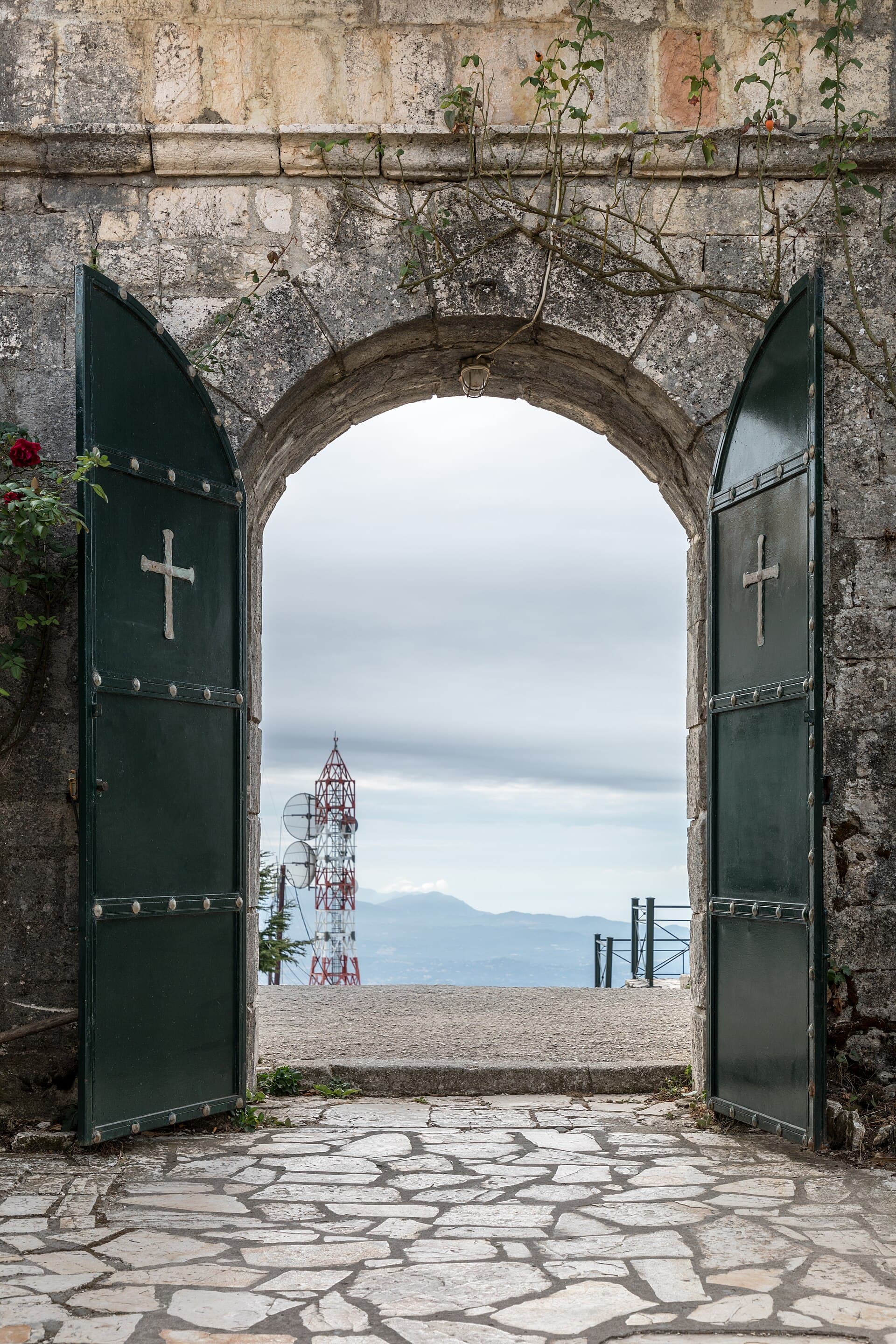
Destinations · Greece
Corfu
The established elegance of the Ionian — Venetian streets, cypress coves and villa country
The established elegance of the Ionian — Venetian streets, cypress coves and villa country
Corfu has been receiving discerning visitors for four hundred years. The Venetians left it a capital of arcades and twin fortresses, the British left cricket and ginger beer on the Liston, and the Durrells left the northeast coast a literary reputation it has never shaken. Of all the Greek islands, this is the one that wears sophistication most naturally.
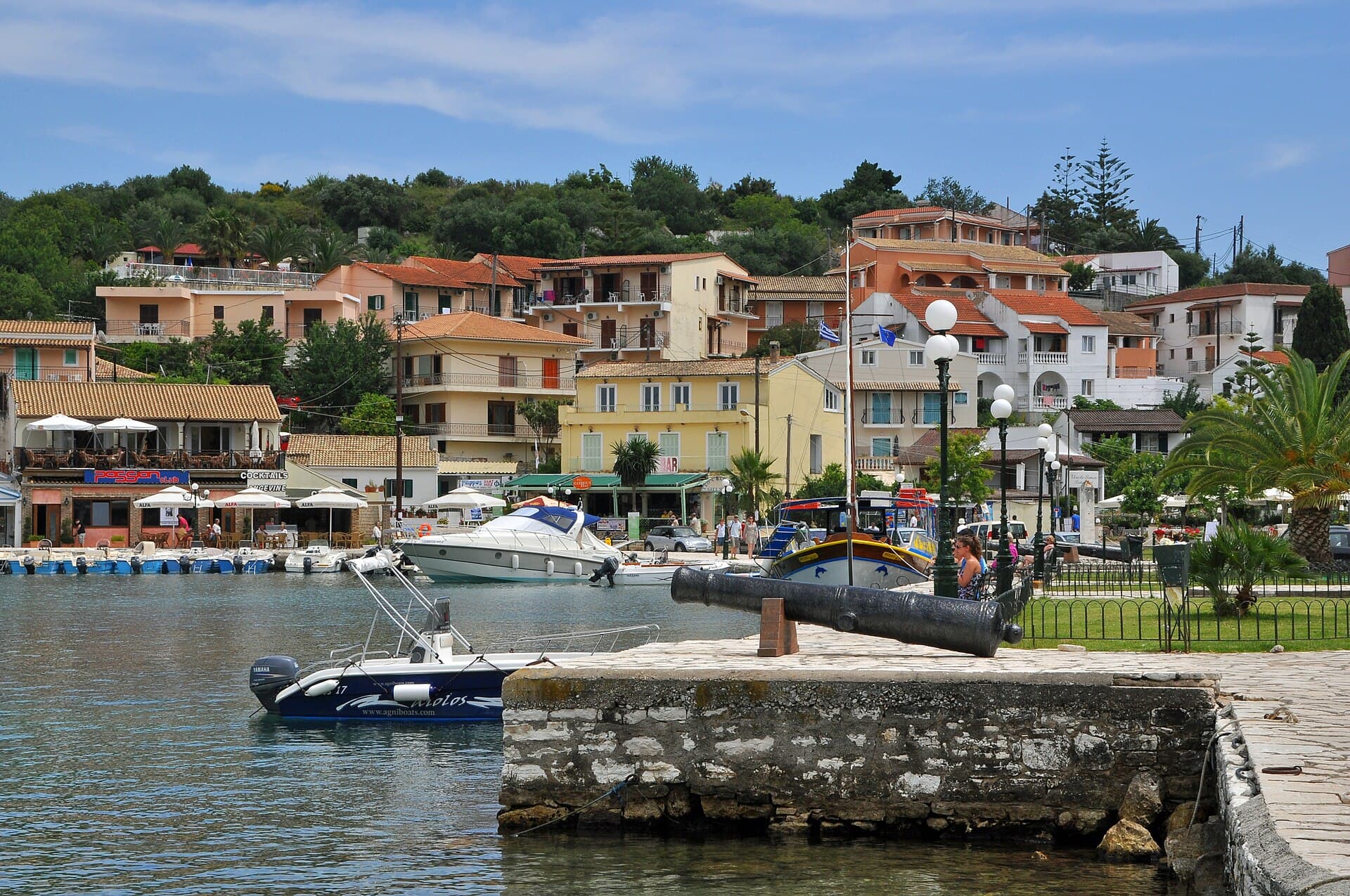
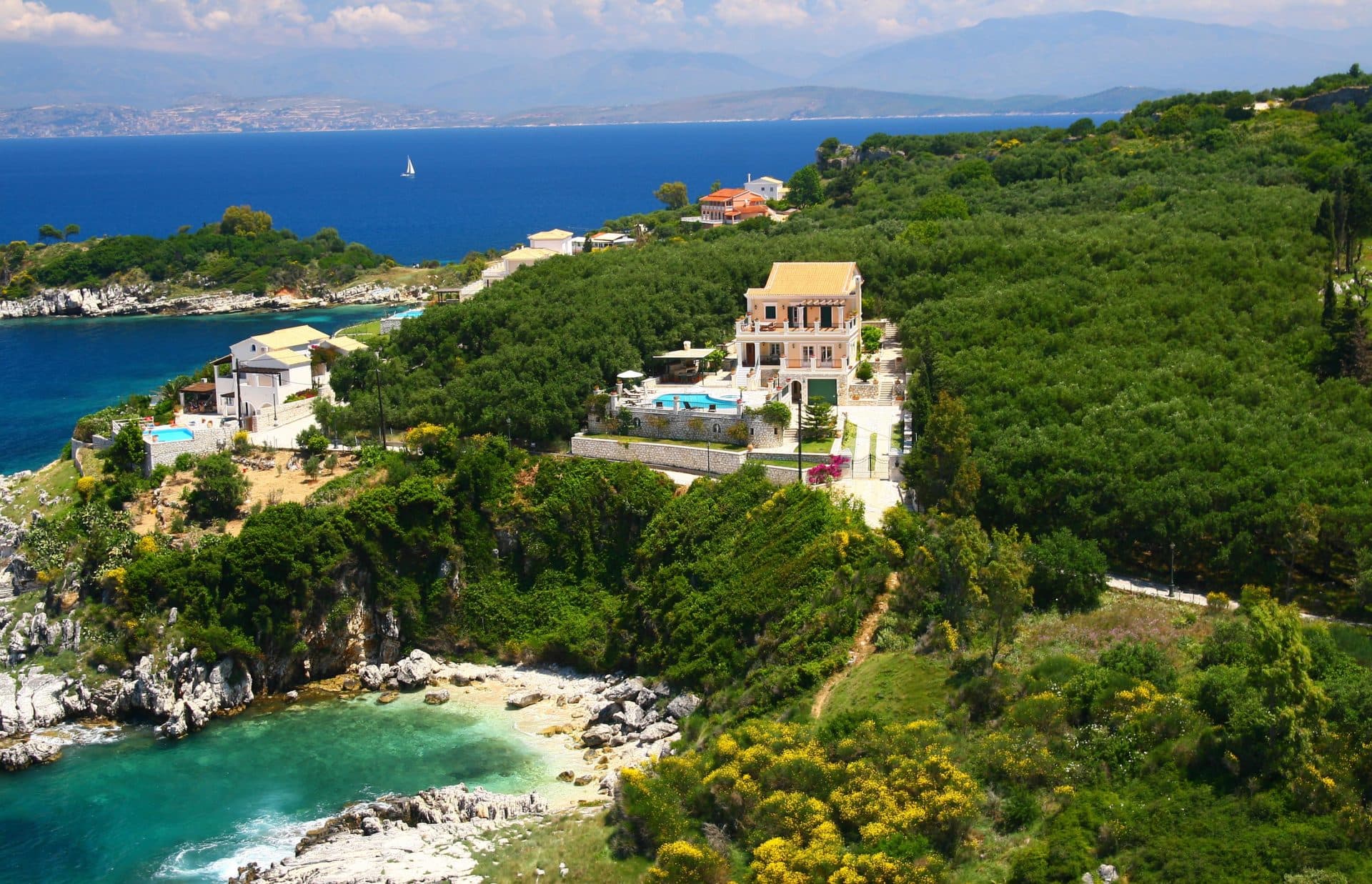
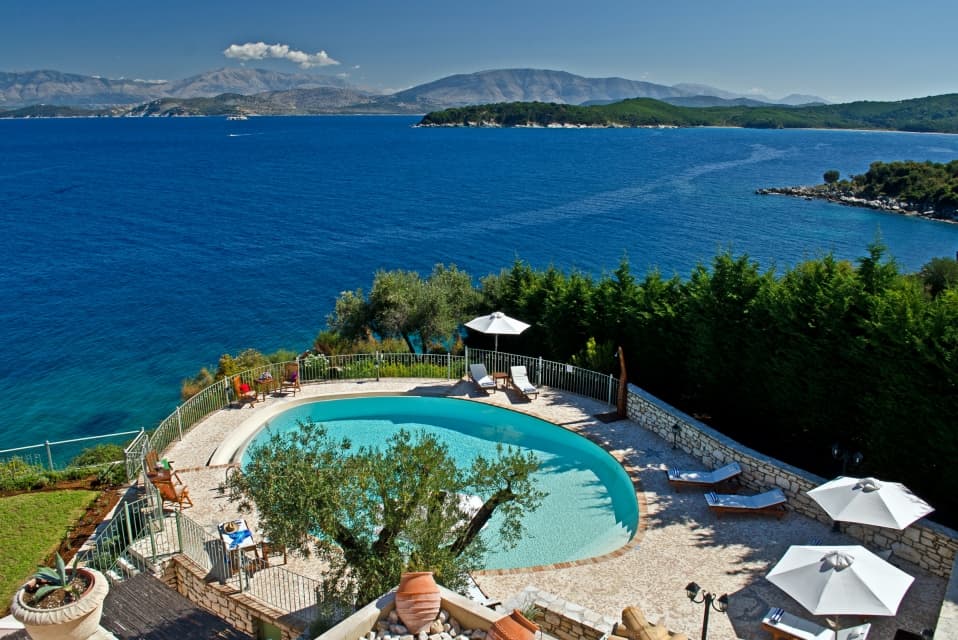
The island's luxury heartland is the northeast: the twenty kilometres of cypress-backed coves between Nissaki and Kassiopi, where whitewashed boathouses have become some of the Mediterranean's most quietly coveted villas. Kalami, Agni, Kouloura, Avlaki — small names, small bays, and a way of life built around a swim before breakfast and a taverna table at the water's edge.
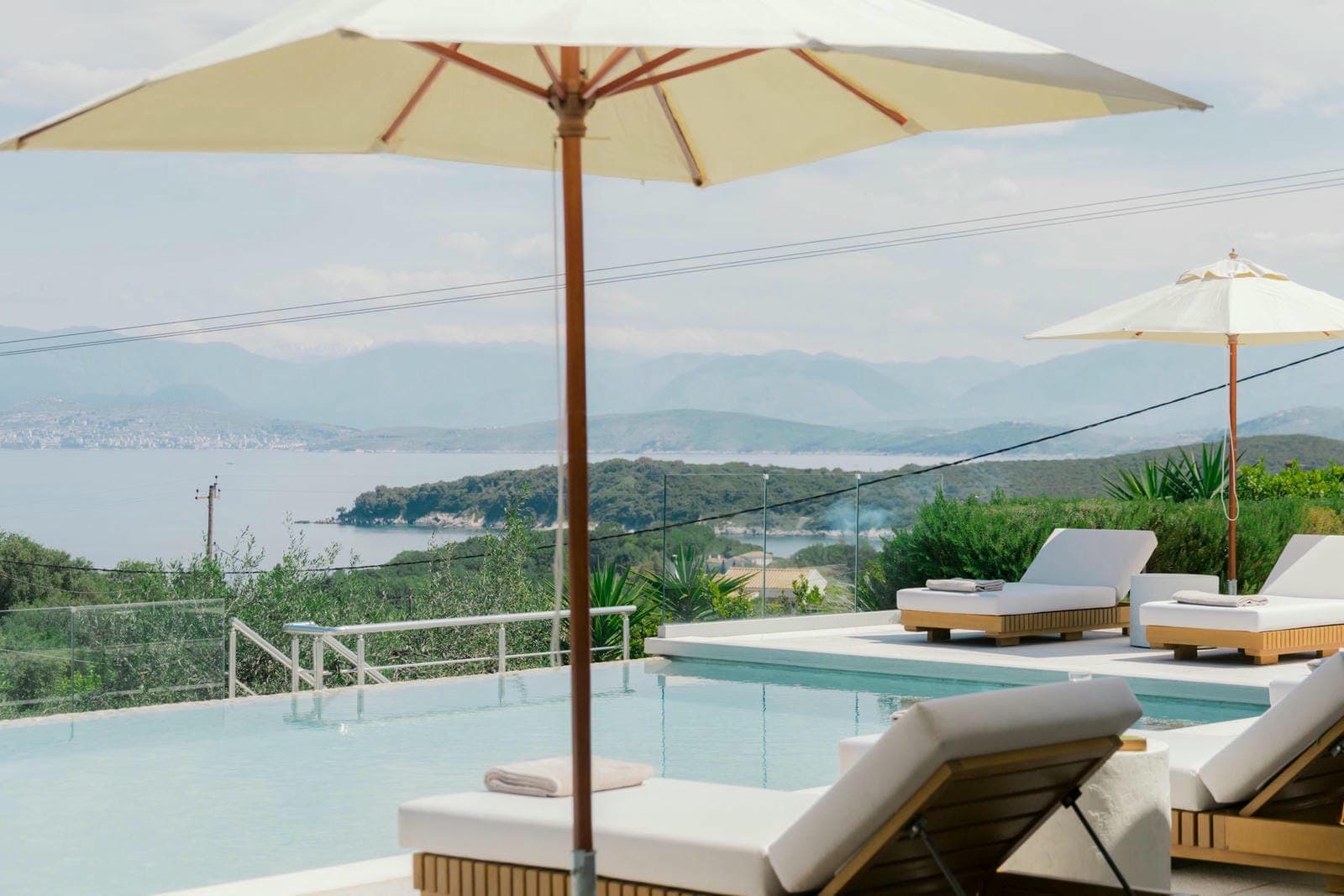
And from any of those bays, the mountains across the water are Albania. The strait narrows to about two nautical miles; Saranda is thirty minutes by fast ferry from Corfu Town. Corfu is the established shore of a new double destination — the elegance that anchors the adventure opposite.
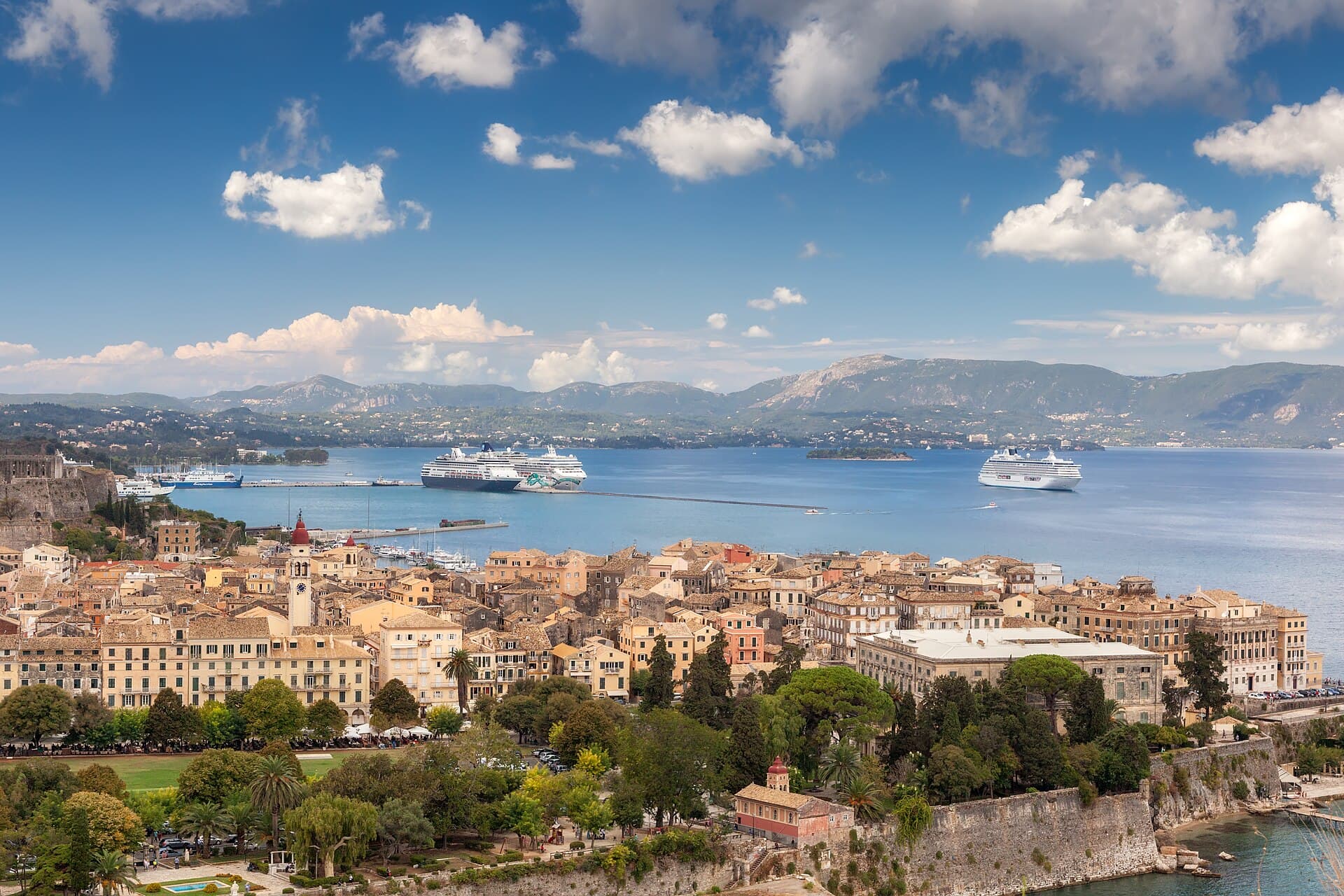
Four centuries of Venetian rule gave Corfu what no other Greek island has: a genuine old-world capital. Corfu Town's UNESCO-listed centre is a lattice of tall shuttered houses, campaniles and washing lines strung between ochre facades, held between the Old and New Fortresses and opening onto the Liston's French-built arcades.
The layers kept accumulating — a British palace, the Achilleion built for Empress Elisabeth of Austria, and the villa culture of the twentieth century. The result is an island where luxury is not an import but a habit.
Between Nissaki and Kassiopi the coast folds into a sequence of small bays that have defined the Corfiot villa holiday for two generations. Kalami, where Lawrence Durrell wrote in the White House at the water's edge; Agni, a bay whose three tavernas are reachable most gracefully by boat; Kouloura's perfect crescent harbour; Avlaki's open beach and sailing breeze; Kerasia's long white pebbles.
This is a coast measured in swimming distances and taverna moorings rather than resorts — the reason its villas, from converted boathouses to hillside estates, are booked a year ahead by families who return every summer.
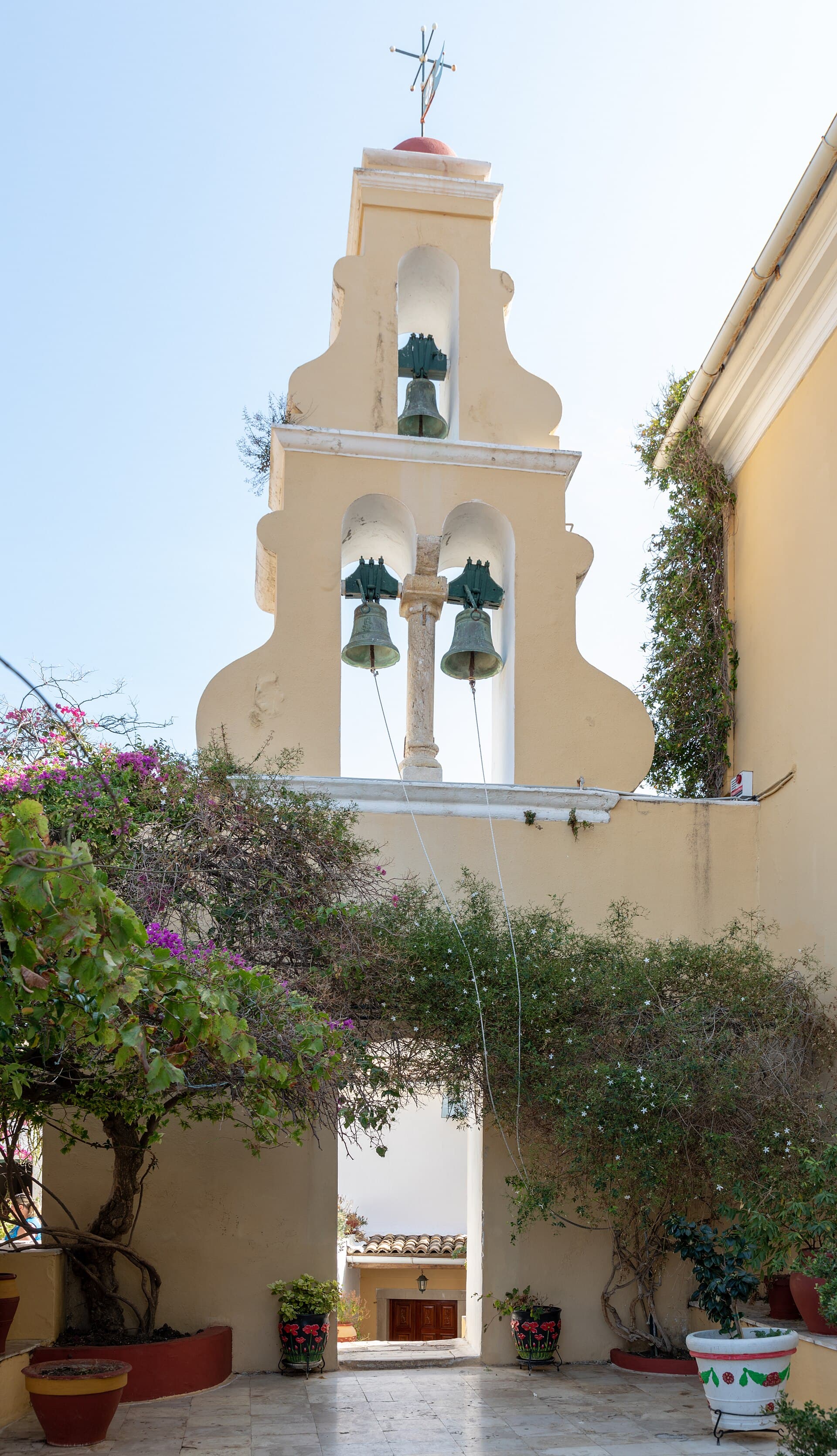
Corfu rewards leaving the villa. Paleokastritsa on the west coast folds six coves around a Byzantine monastery, with sea caves beneath and the Angelokastro fortress above. Corfu Town earns a full day: the fortresses, the Liston, the old Jewish quarter and a kumquat liqueur before dinner.
The island's interior — olive groves planted under Venetian bounty, hill villages like Old Perithia under Mount Pantokrator — is the quiet counterpart to the coast, best explored in the softer light of May, June and September.
From the northeast coast, Albania is not an idea but the opposite bank. The strait between Corfu and the Albanian shore narrows to about two nautical miles at Kouloura — close enough that the muezzin-less silence of the mountains opposite has watched over every Durrell sunrise.
Today that closeness is an itinerary. The fast ferry links Corfu Town and Saranda in about thirty minutes; private boats cross daily in season for Butrint's UNESCO ruins, Ksamil's islets and lunch above the bay at Himarë. Corfu gives the corridor its polish; the far shore gives it its edge.
 GreeceGreece
 Greece
 Restaurant · Kalami
 Restaurant · Agni
 Culture & heritage · Corfu Town
 Bar · Paleokastritsa
 Kassiopi
 Kassiopi
 Kassiopi
 Motor yacht · Gouvia
 Motor yacht · Gouvia
 Catamaran · Gouvia
Describe your dates and who is coming — we reply with villas, a boat for the coves, and the crossing to Corfu.